The current economic structure is not sustainable for generations to come – especially from environmental and social perspectives.
Governments alone will not be able to fund and execute the required timely and just transition to a more sustainable global economy. Investors and businesses have a critical role to play in this transition through the allocation of capital.
Every investment decision has impact, impact investing provides a framework for responsible investors to both manage ESG risks and generate more attractive risk-adjusted returns.
IMPACT ON CAPITAL EMPLOYED (IoCETM)
Return on Capital Employed (ROCE), a known financial term, is a ratio used to assess a company’s profitability and capital efficiency. In other words, this measure used to understand how well a company is generating profits from its capital as it is put to use.
With ROCE used to measure gain, we are introducing a new term “Impact on Capital Employed” (IoCETM) to measure positive impact of an investment – complementing the Double Positive approach. Taking planetary impact as an example, IoCETM can assume a market value for avoided tons of CO2eq emissions per dollar invested, where emissions savings can be translated into financial gain when assessed in terms of the market value of avoided CO2e emissions per dollar invested in mitigation efforts.
WHERE CAN WE ACHIEVE THE LARGEST IMPACT?
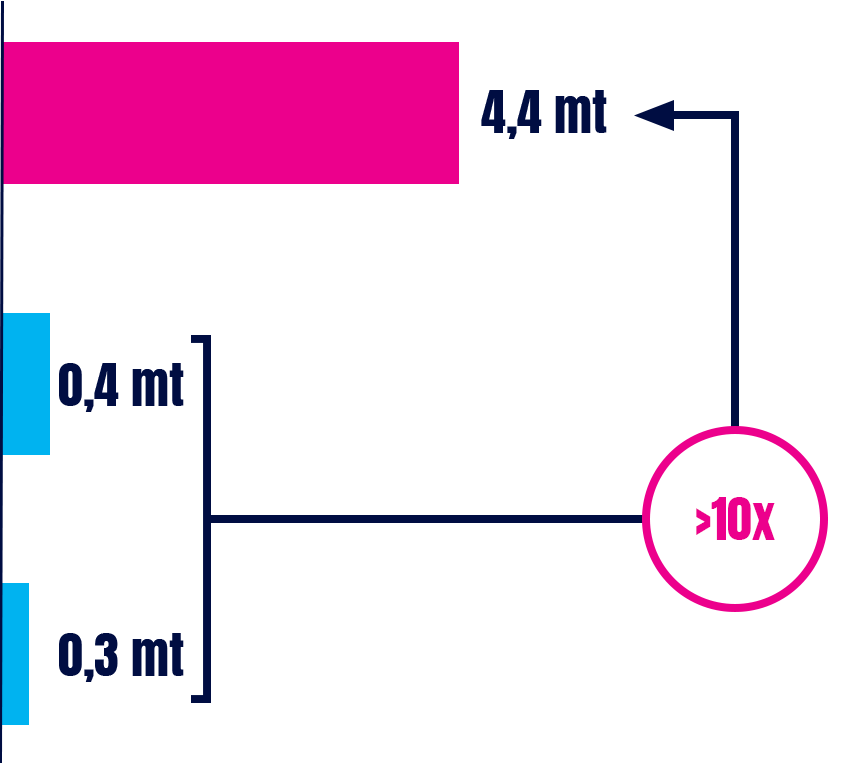
The Protein Transformation is the Most Efficient Lever to Mitigate Climate Crisis
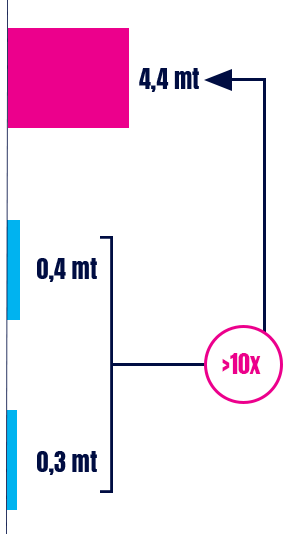
Delivering the highest emission savings per invested capital: 10x more than electric cars & solar power
CO2e saving Metric tons per USD 1,000 investment
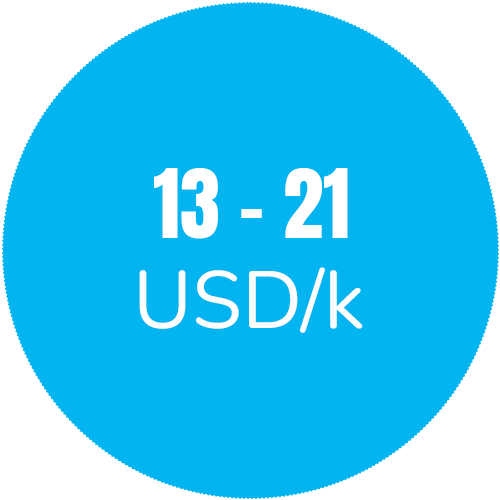
Impact on Capital Employed (IoCETM), USD impact value per USD 1,000 investment
Plant-based proteins
Light road transport
(e.g., electric cars)
Power
(e.g., solar)
IoCE™ is calculated as Theoretical financial impact of a company’s products per capital employed. IoCE is a Blue Horizon trademarked impact return measure
Plant-based protein investments offer outstanding CO2e savings per unit of invested capital
Indicative planetary IoCETM is calculated from emission savings via carbon price at USD 50-80/t CO2e
IoCETM is generated in addition to financial Return on Capital Employed (RoCE)
Source: BCG/GFMA report «Climate Finance Markets and the Real Economy», BCG analysis
SUSTAINABLE FOOD SYSTEMS
We believe investing in outstanding businesses to enable the transition to a Sustainable Food Systems will achieve a Double Positive and consequently deliver IoCETM. We encompass Sustainable Food Systems within three themes:
I. Ag Tech
II. Food Tech
III. Bio & Circular Economy
These three key investment themes are enabled by technologies including plant technologies, fermentation technologies, cell-cultured technologies, automation, and digital and finance.
The positive Impact one can achieve by investing in the transition to a Sustainable Food System is massive, and secular drivers have never been stronger
The current economic structure is not sustainable for generations to come – especially from environmental and social perspectives.
Governments alone will not be able to fund and execute the required timely and just transition to a more sustainable global economy. Investors and businesses have a critical role to play in this transition through the allocation of capital.
Every investment decision has impact, impact investing provides a framework for responsible investors to both manage ESG risks and generate more attractive risk-adjusted returns.
IMPACT ON CAPITAL
EMPLOYED (IoCETM)
Return on Capital Employed (ROCE), a known financial term, is a ratio used to assess a company’s profitability and capital efficiency. In other words, this measure used to understand how well a company is generating profits from its capital as it is put to use.
With ROCE used to measure gain, we are introducing a new term “Impact on Capital Employed” (IoCETM) to measure positive impact of an investment – complementing the Double Positive approach. Taking planetary impact as an example, IoCETM can assume a market value for avoided tons of CO2eq emissions per dollar invested, where emissions savings can be translated into financial gain when assessed in terms of the market value of avoided CO2e emissions per dollar invested in mitigation efforts.
WHERE CAN WE ACHIEVE THE LARGEST IMPACT?
The Protein Transformation is the Most Efficient Lever to Mitigate Climate Crisis
Delivering the highest emission savings per invested capital: 10x more than electric cars & solar power
CO2e saving Metric tons per USD 1,000 investment
Impact on Capital Employed (IoCETM), USD impact value per USD 1,000 investment
Plant-based proteins
Light road transport (e.g., electric cars)
Power
(e.g., solar)
IoCE™ is calculated as Theoretical financial impact of a company’s products per capital employed. IoCE is a Blue Horizon trademarked impact return measure
Plant-based protein investments offer outstanding CO2e savings per unit of invested capital
Indicative planetary IoCETM is calculated from emission savings via carbon price at USD 50-80/t CO2e
IoCETM is generated in addition to financial Return on Capital Employed (RoCE)
Source: BCG/GFMA report «Climate Finance Markets and the Real Economy», BCG analysis
SUSTAINABLE FOOD SYSTEMS
We believe investing in outstanding businesses to enable the transition to a Sustainable Food Systems will achieve a Double Positive and consequently deliver IoCETM. We encompass Sustainable Food Systems within three themes:
I. Ag Tech
II. Food Tech
III. Bio & Circular Economy.
These three key investment themes are enabled by technologies including plant technologies, fermentation technologies, cell-cultured technologies, automation, and digital and finance.
The positive Impact one can achieve by investing in the transition to a Sustainable Food System is massive, and secular drivers have never been stronger